

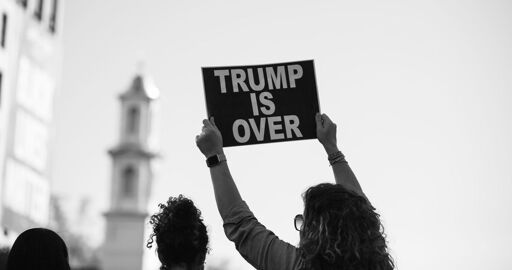
Sweeping Democratic victories in off-year elections seem to be foreshadowing a very good midterms for the party, and one expert believes it’s even bigger than that.
“This is a once-in-a-generation opportunity to fundamentally transform legislative power,” Heather Williams, president of the Democratic Legislative Campaign Committee (DLCC), which focuses on electing Democrats to statehouses, told Mother Jones.
I gotta ask, like what’s the plan even if there is a big blue wave? The current dream scenario it seems is just a centre-right single party state where the Republicans poof into thin air and leave just the Democrats. Your guys’ country needs more parties
The last time the Democrats won control of Congress, they tried to pass a very large electoral reform law.
This bill bans partisan gerrymandering, requires Congressional constituency lines to be drawn by independent boundary commissions, introduces new limits on campaign finance, requires polls to be open for at least two weeks, introduces an automatic voter registration scheme, makes the final day of voting a federal holiday, expands postal voting, makes obstructing voter registration a federal crime, restores voting rights to felons when they leave prison, bans lying to voters about when or where to vote, introduces public financing of elections, limits the amount of money that political parties can spend on an election, requires candidates for president or vice-president to disclose their tax returns, imposes a code of ethics on the Supreme Court, and bans companies from making big donations to inaugural committees.
This bill did not pass because the Senate was evenly divided and the Democrats suffered a backbench rebellion from two “centrist” senators.
As is tradition.
There’s a reasonable suspicion the Democrats only advance these bills proposing real change when they already know they have those two “rebels” lined up to block it. That way they keep the voters coming back for another try, while looking after the interests of those who pay them.
Democrats are an uncertainty while Republicans are a certainty to vote against this kind of reform. To me the solution is clear, remove the certainty, get so many DNC in there that expulsion becomes viable without handing the reigns over to Rs.
I’m pretty sure if that were the case then someone would have blown the whistle on this several years ago. These people employ staffers, many of whom are very ideologically dedicated to the progressive cause, and would not hesitate to become a person familiar with the manner who agreed to an interview on condition of anonymity. In fact, this is probably where 90% of Congress leaks come from.
Removed by mod
The plan is to create a de facto one-party state where Republicans consistently get around 20-30% of the vote.
To stay in power, the ruling party needs the opposition to be too weak to attempt a takeover, but too strong to be wiped out. By doing this, the “I’m not [opposition]” can remain the default messaging.
Historically, when a party is defeated electorally over and over again, its members either form a new party or they rebel against leadership and the party lurches left or right in the direction of the voters. This happened to the Republican Party after they lost five presidential elections in a row (four of which were won by Franklin Roosevelt). The next Republican president in office was Dwight Eisenhower, who by today’s standards would be a moderate liberal.
You can also see it happen in other countries. After being stuck on the left side of the room for 14 years the British Labour Party elected a… moderate conservative as leader and then subsequently won the next election.
Generally speaking, when a party keeps losing elections over and over again, picking a more extreme candidate is usually catastrophic to their electoral chances—see what happened in Canada and Australia.
Before anyone comments with objections or observations of this dynamic in modern American politics, do note that no party has lost 3 elections in a row in five decades.
We need significant changes to our voting systems to make a multi-party system viable. As it is stands now, it basically devolves into a 2-party system because a 3rd party will just end up dividing the votes of one side and helping the other end.
There are several voting schemes that would make more parties viable. Unfortunately, it’s a catch-22 because the people who can enact such a change are disincentivized from doing so because they benefit from the current paradigm.
/I am using “multi” here to mean more than 2
They have them, they just don’t vote them. The big brain argument is “because nobody does”.
Because the current system is setup to exclude third party voters, mathematically the FPTP system will result in a two party duopoly. And we’ve seen time and time again that the spoiler effect reduces votes to the party more similar to the third party.
So yeah, unless you get all the people to dedicate to a third party blowout, it is a waste. If an incumbent president didn’t have enough influence to break the duopoly by going third party, do you really think it’s ever going to happen? Particularly without a huge movement of said third party?
Pragmatically speaking, voting third party only serves to help the people you disagree with more.
The same argument applies in every other voting system and that is simply not how it works. If you never vote what you actually want you will never get what you actually want. Saying all need to change at once is nonsense, a gradual shift is more than enough. But people argue exactly like that and so never vote what they want, that is the core issue. Other voting systems still see few % parties get nothing and the argument people use to not vote them is exactly the same. The has to be some cutoff below which you get nothing and there is no way to prevent that in a real system with integer numbers.
Yep. Every voting system has anomalies that can be gamed. FPTP leads to a 2-party equilibrium. Most proportional-representation systems lead to coalition governments, and such systems give disproportionate power to small centrist parties needed by a coalition in order to form a majority.
What tha means is that under PR, people like Manchin and Schumer would be included in every coalition government. Just what we need: more power to unprincipled opportunists.
It literally does not, there are ranked voting and instant runoff systems where it doesn’t apply.
No one but me, of course. I expect to vote third party (or for candidates considered a traitor to both big parties) until I’m dead.
Vote for me. My campaign slogan is “Bacon”.
No further questions please! Elect me! Bacon.
Have you filed for write-in eligibility in my state?