There is a much bigger play going on, here. There’s the old western powers, who exercised power institutionally. You vote on representatives, who then govern by legislature, which governs institutions, which governs the people. This sort of decentralized power structure worked so effectively, the US and western allies became the major superpower(s) of the world.
More recently, technology has enabled tyrants to effectively control and manipulate institutions with a much higher degree of precision. You don’t need to balance power across institutions when a central authority can manage power delegation all on its own. China is a pinnacle demonstration of this, with their Command Economy.
The western world has to prove that democracy can still standup against a command economy. Can you vote, implement, and protect faster than an enemy state can surveil, exploit, and disrupt? If you can’t, then you will lose the edge in world dominance.
The world which emerges will be one led by whoever can exercise the most control. Western nations are showing, their control is dwindling under advancing technology. It’ll be interesting to see how this develops over the next century.
I’ve heard someone put it this way, before: China started tyrannical and watched the US, later implementing democratic and capitalist reforms on top of their tyranny. It worked. Now, the US may be heading to a similar situation: implement tyranny on top of their existing democratic and capitalist institutions. We’ll see how well it works out.


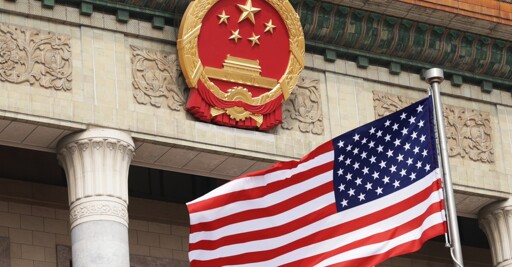
It is really coming to something where we (the free world) are actually looking to a tyrannical dictatorship in China for some semblance of normality.
So they are scooping people off the streets and putting them in concentration camps?
So they have declared war on multiple countries last 12 months?
So they have threatened to invade multiple countries last 12 months?
Y’all might could look up “tyrannical dictatorship” in one of them leftist dictionaries.
There is a much bigger play going on, here. There’s the old western powers, who exercised power institutionally. You vote on representatives, who then govern by legislature, which governs institutions, which governs the people. This sort of decentralized power structure worked so effectively, the US and western allies became the major superpower(s) of the world.
More recently, technology has enabled tyrants to effectively control and manipulate institutions with a much higher degree of precision. You don’t need to balance power across institutions when a central authority can manage power delegation all on its own. China is a pinnacle demonstration of this, with their Command Economy.
The western world has to prove that democracy can still standup against a command economy. Can you vote, implement, and protect faster than an enemy state can surveil, exploit, and disrupt? If you can’t, then you will lose the edge in world dominance.
The world which emerges will be one led by whoever can exercise the most control. Western nations are showing, their control is dwindling under advancing technology. It’ll be interesting to see how this develops over the next century.
I’ve heard someone put it this way, before: China started tyrannical and watched the US, later implementing democratic and capitalist reforms on top of their tyranny. It worked. Now, the US may be heading to a similar situation: implement tyranny on top of their existing democratic and capitalist institutions. We’ll see how well it works out.
Dictatorship is when a president needs approval from congress to do anything. You sure are very smat.