

59
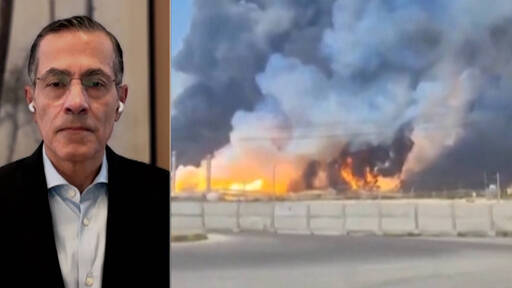
In a major escalation in the war in the Middle East, Israel has bombed Iran’s South Pars gas field, the largest known natural gas reserve in the world, leading Iran to attack energy sites across the Gulf. Iranian American professor of international affairs Vali Nasr says that Iran is prepared for a much longer war than the U.S. and Israel anticipated. “The longer this war goes on, the more Iran is building leverage, and the more the strategic calculations of Israel and the United States appear to be falling short,” he says. Iran “thinks the longer that the war goes on, the less Israel and the United States will be able to defend against Iranian missiles, because they’re going to run out of interceptors.”
In the latest sign the war on Iran could be just beginning, Reuters is reporting President Trump is considering deploying thousands of more U.S. troops to the Middle East. The Pentagon has also asked for $200 billion from Congress.
The Iranian president has proposed terms for the end of the war including reparations and guarantees against future war. Nasr suggests that the Iranians are “confident” that some of their terms may be met. “President Trump may have to accept the fact that he has started a war that is not going to give him what he expected, and he has to settle for an exit in order to be able to go back to the agenda that it had before.”
If by long they mean 3-5 years sure.
But in 10-15 years nobody will let the Strait of Hormuz get blocked like this again.
The US has been playing the short game of 1-2 days.
If oil is still a significant energy source in 15 years we’re all going to die in a climate-change baked hellscape anyway.
The only way around Hormuz is by embracing renewables. And if countries get serious about doing that, then it would be the best possible outcome of the whole thing.
Such an underrated point. The economics and strategic impact of renewables is obvious at this point. Every time there’s a price surge in petrol, I hope that the US would wake up and hasten the transition, but we just keep kicking our feet like toddlers.
I have little hope for the US just because the oil industry has so much control there, but I’m hoping for much of the rest of the world this will finally be a wake up call. Given that even if fighting stops tomorrow, it’s going to take years for some of the infrastructure to be rebuilt, things are not going back to the way they were. So, there’s going to be an ongoing need to find alternative energy sources. It’s not a one time event countries can wait out and go back to business as usual.
As long as Iran is able to produce missiles and drones there is nothing they can do
How??? You have giant, slow, unarmed ships filled with flammable liquid that are forced to go through a small channel. Forget missiles and drones; you could set them on fire with artillery.
More likely, in 10-15 years we will have moved away from fossil fuels to the point that a closure will no longer crash the world economy.
You could set them on fire with shit i can buy at home depot and an inflatable kayak.
In an area as constrained as the straits, im not entirely sure you’d need the kayak.
Gulf countries will build pipelines around it, so there’s a backup.
Because giant stationary targets are much better.
I don’t think we will reach that point in a meaningful timeframe.
My understanding of the global oil market is rudimentary but… even if we were only using half the oil we presently are when the strait was shut down, the same portion would likely be coming from there, so the “shock” would still be the same because increasing production elsewhere to increase supply is non-trivial.
That said, if a big chunk of transportation infrastructure has been “decarbonised” then sure, fuel costs might increase while transport costs are less effected.
The same fraction of oil production, yes, but a much smaller fraction of total energy production.
You would still have shortages of specific fractions that have non-energy uses (like Helium or plastics), but at least fuel would be less affected.