

For this reason, elected authoritarians who wish to consolidate control typically win not by flashy displays of might, but by convincing a critical mass of people that they’re just a normal politician — no threat to democracy at all.
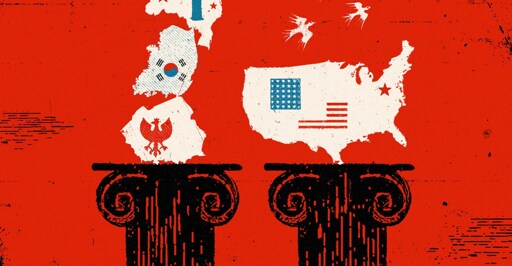
That means the survival of democracy depends, to an extent not fully appreciated, on perceptions and narratives. In three recent countries where a democracy survived an incumbent government bent on destroying it — Brazil, South Korea, and Poland — the belief among elites, the public, and the opposition that democracy was at stake played a critical role in motivating pushback.
Worse, in the examples they give, the legislatures and/or judiciaries stood against the dictators.
Here, we have decades of propaganda fueled by the oligarchs that has removed the world view of a third of our population from reality, and it’s not just Trump - the Republican party is in on the deal, from Congress to SCOTUS.
It’s not the same battle. It’s not the same order of magnitude. It’s at least two orders of magnitude harder.
I’m not saying we shouldn’t fight; rather, we should fight all the harder.
But that’s why I’m not certain partition / civil war type solutions are off the table.