
For this reason, elected authoritarians who wish to consolidate control typically win not by flashy displays of might, but by convincing a critical mass of people that they’re just a normal politician — no threat to democracy at all.
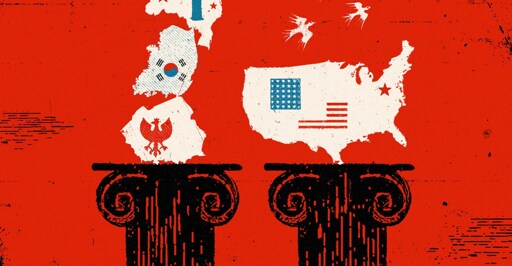
That means the survival of democracy depends, to an extent not fully appreciated, on perceptions and narratives. In three recent countries where a democracy survived an incumbent government bent on destroying it — Brazil, South Korea, and Poland — the belief among elites, the public, and the opposition that democracy was at stake played a critical role in motivating pushback.


Yes, it would be desirable if truth were rewarded and deliberate false information punished. Unfortunately, neither is even remotely realistic:
True, or at least objectively researched, information was the business of journalism, which for the reasons mentioned above now exists only as a farce of itself (but still retains parts of its former reputation as a reliable source of information). I just don’t think there is any way to make journalism work in the age of the Internet (and I’m from Germany where we have publicly funded media).
Criminalizing misinformation would in turn require appropriate legislation. And as is always the case with laws, those in power would use them to make their worldview the only one that is widely disseminated. To see this, one need only look to the US, where the criminal but also wealthy president is already using current legislation to sue anyone who dares to make him look bad.
So, I think the only option that remains, despite all its flaws and problems, is decentralized social media. Of course, it is susceptible to manipulation, but at least it is not directly controlled by those who want to manipulate the discourse in their favor.
It is certainly not a solution in the true sense of the word - in a purely profit-oriented system, there can be no such thing - but in my opinion, it would at least be an improvement on the status quo, in which people like Zuckerberg and Musk can de facto directly control what people perceive as their reality.