

For this reason, elected authoritarians who wish to consolidate control typically win not by flashy displays of might, but by convincing a critical mass of people that they’re just a normal politician — no threat to democracy at all.
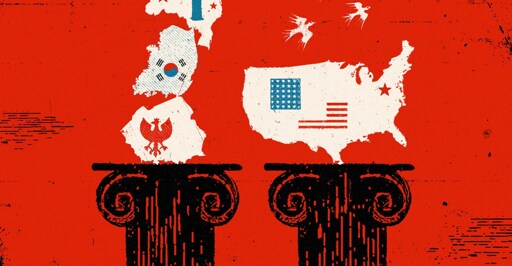
That means the survival of democracy depends, to an extent not fully appreciated, on perceptions and narratives. In three recent countries where a democracy survived an incumbent government bent on destroying it — Brazil, South Korea, and Poland — the belief among elites, the public, and the opposition that democracy was at stake played a critical role in motivating pushback.
Liberal slop that posits we must return the wholesome big chungus good old days of healthy American democracy (as if the US wasn’t born out of wholesale genocide of Native Americans and the enslavement of an entire continent). You can tell this article was written by someone who just wants to go back to esting brunch while the US plunders the planet. Does the article even mention workers? If it does, it makes far more effort to put its stock in “institutions”, “courts”, and “elites”.
American fascism is not an abberation, but the logical conclusion. This article comes from the perspective that we have to save the current system as opposed to even considering a new one.
Fascism Is Possible Not in Spite of Liberal Capitalism, but Because of It