

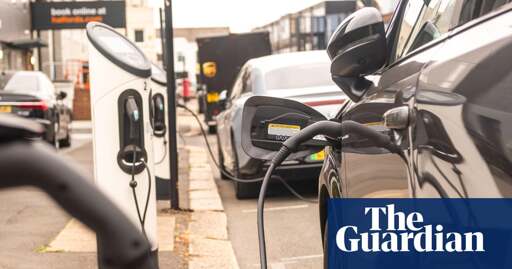
While most hybrids are said to use one to two litres of fuel per 100km, a study claims they need six litres on average
Plug-in hybrid electric cars (PHEVs) use much more fuel on the road than officially stated by their manufacturers, a large-scale analysis of about a million vehicles of this type has shown.
The Fraunhofer Institute carried out what is thought to be the most comprehensive study of its kind to date, using the data transmitted wirelessly by PHEVs from a variety of manufacturers while they were on the road.
. . .
According to the study, the vehicles require on average six litres per 100km, or about 300%, more fuel to run than previously cited.
The scientists of the Fraunhofer Institute found that the main reason for the higher-than-stated fuel usage was due precisely to the fact that the PHEVs use two different modes, the electric engine and the combustion engine, switching between both. Until now it has been claimed by manufacturers that the vehicles used only a little or almost no fuel when in the electric mode. The studies showed that this was not in fact the case.
I can say from personal experience that my Chevy Volt gets around 40-60mpg when it kicks over to gas. That said, it rarely does, because my daily commute comfortably inside the battery’s range.
Again, I’ve got a tank of fuel from… several months ago? Barely 7 gallons and it hasn’t run out. Like, I almost never visit the gas station anymore. So, idk. Maybe the Volt was just built better.
Based on my interpretation of the article the Porsche plug in was so bad that it skewed the study, it used 85% more fuel than all of the other cars in the study. But it doesn’t surprise me, it’s not the first time Porsche (Volkswagen) wasn’t very trustworthy with their fuel stats in recent years. Something else was that the less expensive the car, the better it was on fuel economy, seems logical once you think about it. The more sensible the car the more likely that buyer is to be concerned with those types of stats.
Nobody (expecting to win) is street racing a Volt or a Prius, to be sure.
So there’s little incentive to cheat emissions standards in order to juice performance.
There’s no way it would win a race, but I have to say, I have the latest Prius Prime and it’s actually pretty damn fast, especially for a Prius. They really shook off the underpowered rep with this latest batch.
This mirrors my experience with my 2017 Prius Prime. On the rare occasion when I activate gas mode (e.g., for long trips) it gets 50 mpg no problem. Otherwise it’s an electric car and the gas engine is completely shut down.
During COVID lockdowns, we were driving a lot less. We got a warning message that we needed to burn at least 5 gallons of gas each year to keep it from going stale. So we drove it exclusively in gas mode for a while, then went right back to not caring about gas prices at all.
The Prius PHEV basically turns into a regular Prius once the battery is empty because Toyota designed it for low consumption. Others like Volkswagen just needed PHEVs for tax reasons, so the actual consumption does not matter to them.
That’s not correct, but proves my point, people have no idea how these cars work.
A Prius uses an electric motor to assist the gas motor, the primary drive is the gas engine. Kinetic energy is recovered and stored as electrical potential.
PHEVs are EVs with a gas generator on board. The gas motor only charges the battery.
PHEVs do indeed typically have the output of their engines connected to the wheels through the drive train. You’ve described a range extender. Vehicles with a range extender do not have the gas engine connected to the drive train directly.
Unfortunately „most people“ in this case includes you, but not me. But we can change that 😉
The major differences between the Prius HEV and PHEV are that the battery has a larger capacity and that it can be charged externally.
The transmission works exactly the same and on both models the gas engine can be used to provide traction to the wheels without converting everything to electrical energy first.
It also has (at least) two electric motors - again, both HEV and PHEV.
Look up Hybrid Synergy Drive on Wikipedia. There are also some good explanations on YouTube. It’s at the same time a quite simple, yet very smart design. I find it fascinating what the Toyota engineers have come up with.
Doesn’t gas go bad eventually? Could that be a problem if you end up needing the ICE to turn on?
they actually thought of that when designing the volt. the tank is pressurised to stop evaporation (which causes the concentration of additives to change so they fall out of solution), and the engine runs for a minute or so every month (or if you haven’t started it in a while) to make sure there’s no bad gas in the lines.
if only it had a proper stats screen, came in hatchback form factor, used a type 2 plug in europe, and had five seats, it would have been a perfect car. oh and the battery range is a bit too small, but i think there’s probably someone who can fix that. after all, the batteries are twelve to thirteen years old at this point.
Wow, awesome tech
The Volt was also the most reliable vehicle GM ever made. But they stopped making them because without incentives, they lost money. It’s a lot of complexity and weight to carry around two redundant drive systems, EVs make more sense, but the media drilled range anxiety into consumer’s heads.
I have a different model, but it more or less vacuum seals the gas tank to mitigate that - it is still wouldn’t last forever, but without air to react with the aging process is significantly slowed down.
Fuel with ethanol will go bad if it sits stagnant for a long period of time. As long as you are driving the car around or using fuel stabilizer, it should be fine.
It would have to sit years. Not an issue in modern fuel injected systems. Most of fuel stabilizer is ethanol, BTW.
They do turn on the ICE if the fuel is old, but it has to be very old, months.
Hence my question. Lol
I used to have a motorbike that I hardly ever used and it was so unreliable because of this. I ended up having to get rid of it in the end because it just wasn’t worth the effort for the amount of time that I used it.
You’re from the US.The US fixed the bullshit method of claimed fuel mileage about two decades ago. This article is all about the EU. Their official fuel efficiency ratings still have room for bullshit.
It’s not even that, it’s the abomination of combining electric and gas “efficiency” into a single unit. That number is always going to be trash when one of those variables represents zero fuel usage and other represents pure fuel usage. In the US, the “MPGe” rating suffers from the same exact issue.
The EPA in the US doesn’t do that, buddy. They give 2 separate ratings. You also don’t understand what MPGe is measuring. MPGe is a pure electric mode. The gas used rating in MPGe is for fuel equivalent it would take to charge the battery back up.
It then also shows the MPG rating, and that rating is what you’ll get after the battery from driving in all electric mode would be too drained and the ice motor will be doing most of the work.
You were charging it. The PHEV drivers are not charging at all, they were told the cars were self charging. Many use street parking and can’t charge. They should be driving hybrids, not plugins they never plug in.
You have to work at a car service center to truly appreciate how stupid some people are, and they are not rare.