

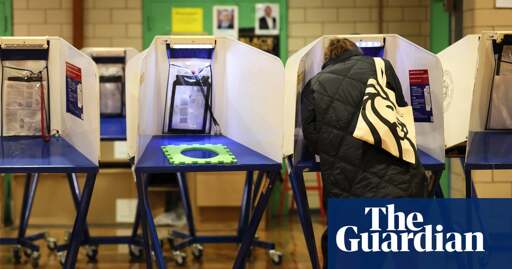
Officials ask at least 43 states for sensitive details as critics fear effort to sow doubt about midterm election results
Alarm as Trump DoJ pushes for voter information on millions of Americans
Officials ask at least 43 states for sensitive details as critics fear effort to sow doubt about midterm election results Sam Levine in New York Thu 15 Jan 2026 07.00 EST
The justice department is undertaking an unprecedented effort to collect sensitive voter information about tens of millions of Americans, a push that relies on thin legal reasoning and which could be aimed at sowing doubt about the midterm election results this year.
The department has asked at least 43 states for their comprehensive information on voters, including the last four digits of their social security numbers, full dates of birth and addresses, according to the Brennan Center for Justice. Eight states have voluntarily turned over the information, according to the Brennan Center, and the department has sued 23 states and the District of Columbia for the information.
Many of the states have faced lawsuits after refusing to turn over the information, citing state privacy laws. Some of the states have provided the justice department with voter lists that have sensitive personal information redacted, only to find themselves sued by the department. Nearly every state the justice department has sued is led by Democratic election officials.
Their worldview quite literally stems from the idea that there should be Out-Groups whom the law binds but does not protect, and In-Groups whom the law protects but does not bind.
That’s how they square their “don’t tread on me” attitude with their want of big government. They recognize that in order to properly humiliate and subjugate “the others,” they need a big state militarized police force and constant surveillance, but if they were ever themselves to fall victim to it, then they cry foul. They can’t learn the lesson until they’re caught up in it, and usually instead of updating their opinion and voting like it, they simply drop out of the democratic process all together, saying that “both parties are the same.”
They are the uneducated simpletons that the founding fathers feared, which is why they originally wanted only educated people to vote. I’m, uh, starting to come around to the idea myself.
There’s still educated, intelligent people who look at others that way, it’s not wholly education. Though you can argue they’re less likely to be conservative and more aware of the state of the proletariat.