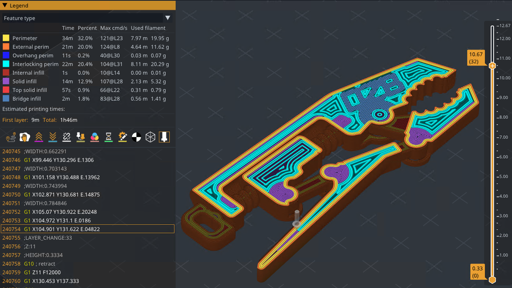
I mean, first layer adhesion is a problem common to more than just a specific printer and there are all kinds of tips and tricks to deal with it. The only one I tried (covering the bed in painter’s tape) didn’t pan out, and a friend was talking up the glass bed he just installed.
So instead of trying more tips and tricks like taking a glue stick to the bed surface, I went with the glass bed. I was expecting it to be like a $60 part but it was only like $15 so that worked out really well.


It’s theoretically possible under ideal conditions but probably not practical.
There is a maximum hop count of 7 which means there can be, at absolute maximum, seven nodes between the sender and recipient. The default, though, is 3 hops.
While the radios may, in theory, be able to work at the range of “a few states over” as the crow flies, terrain, structures, and line of sight would likely prohibit them from working in practice at such distances. You’d also need a reliable series of hops to reach from you to them. Again, at those distances, you’d very likely exceed the maximum hop count pretty quickly.
From what I’ve seen, large meshes are generally regional.
There’s a way to join meshes over the internet via MQTT but I haven’t messed with setting that up and in some cases it can potentially overwhelm a local mesh.