

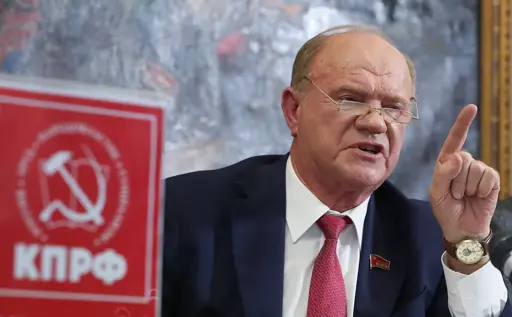
According to him, the country’s economy “hit rock bottom” in the first quarter, which could lead to a crisis.
Zyuganov also suggested that the situation this fall could resemble the events of 1917, when the communists came to power.
Video with English subtitles available here: https://bsky.app/profile/antongerashchenko.bsky.social/post/3mk3d7tu6m22v
Maybe, but I don’t think that the conditions are nearly as bad as they were in 1917. They’re obviously worse than they would have been had Russia not entered into the war, but the collapse in 1917 was due to urban food shortages. I don’t mean “luxury X is unavailable”, but that people couldn’t get staple food to survive because of demands of the war.
https://www.smithsonianmag.com/history/russias-february-revolution-was-led-women-march-180962218/
https://www.bbc.co.uk/bitesize/guides/ztyk87h/revision/5
Now, okay. It’s possible that standards for political support are different, that the bar has changed. But the public in Russia of 2026 — though it may be in a worse state than Russia of 2020 due to resources consumed by the war — is also not experiencing the degree of deprivation of Russia of 1917.
This is consistently true of most revolutions. Once a lot of people are staring at the possibility of starvation you hit critical mass on people with nothing to lose.
That is definitely true, but 21st century examples of revolution don’t necessarily need a food shortage to begin (Maidan, Nepal, etc.)
I’m no historian but I think self-determination is up there with starvation as a common cause for revolt. But Russians wouldn’t be throwing off the shackles of a foreign empire.
It’s true. Looking back on revolutions, starvation is a common cause. What we haven’t seen is a relatively better off population revolt because their conditions got notably worse, from pretty good to pretty bad but not close to starvation.