

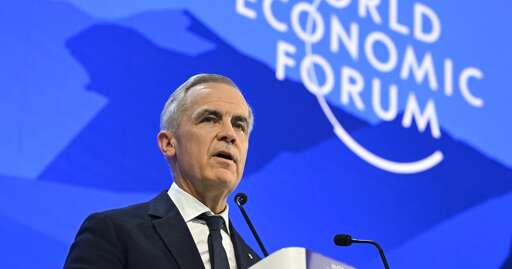
Invoking Vaclav Havel, he said it was time to stop pretending that what the western powers called a rules-based order was not a self-serving sham.
“Great powers can afford, for now, to go it alone. They have the market size, the military capacity and the leverage to dictate terms. Middle powers do not. But when we only negotiate bilaterally with a hegemon, we negotiate from weakness. We accept what’s offered. We compete with each other to be the most accommodating,” he said
“Being a happy vassal is one thing, being a miserable slave is something else,” he said.
“If you back down now, you’re going to lose your dignity, and that’s probably the most precious thing you can have in a democracy, it’s your dignity.”
Not trying to contradict anything you said, I am interested in socialism as a model, generally speaking, but I don’t know much about its economic or social model.
As someone very close to socialist countries that have done rather poorly, I have a few questions about it.
What exactly is pushing people and producers from tending towards mediocrity in socialism? I hate capitalism and how it affects us culturally, but the one thing I think it can succeed at (when monopolies are properly combatted), is using competition to push for excellence. Of course, I know nowadays it’s not the case because anti-trusts have been gutted so we’re full of monopolies and duopolies everywhere. But generally speaking, why would anyone make any effort for excellence under systems that don’t reward it or punish mediocrity?
I’m not saying we should trend towards capitalism where mediocrity is punished by starvation or death by exposure to the elements, but isn’t mediocrity, lack of consistent maintenance of common goods, etc kind of a huge problem of public and social governments etc?
They seem to be very good at equalising the playing field and providing for the needy, but it seems like persistent deterioration of common goods, infrastructure, etc is a pervasive issue in most communist governments that have been tried. Which leads to a lot of losses, inefficiencies and oversight. How would a new socialist model address these common issues? They’re not minor things that should just be hand-waved away either.