

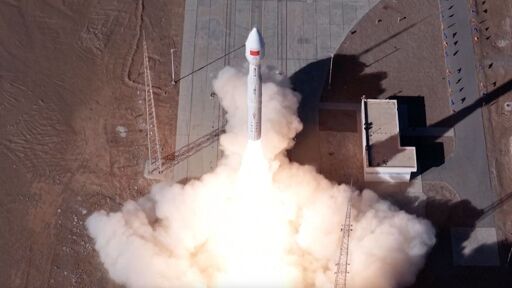
“As far as we know, no coordination or deconfliction with existing satellites operating in space was performed, resulting in a 200 meter close approach between one of the deployed satellites and STARLINK-6079 (56120) at 560 km altitude.”
“As far as we know, no coordination or deconfliction with existing satellites operating in space was performed, resulting in a 200 meter close approach between one of the deployed satellites and STARLINK-6079 (56120) at 560 km altitude.”
Kessler syndrome is something the Internet loves to talk about without truly understanding.
These satellites fly at a very low orbit, and will deorbit themselves within a few years if they go dead. They would likely deorbit even faster if there was a debris cloud following a collision.
We’re not going to be locked out of space for generations, not by any means.
Maybe, but not always. Debris from a collision can be flung in all directions, including higher orbits.
Thankfully, those higher orbits probably won’t be long term stable since the perigee will pretty much always be at the point of impact. But it could very well be stable for years, since most of the orbit won’t be dragging through the atmosphere anymore.
But the real risk is a cascade effect. One hit can create thousands of pieces of debris, which may well cause another hit. Etc etc.
Possible, but not at all likely. The joy of orbits are they’re pretty predictable because after the energy is applied the object just keeps following a path. To get a higher circular orbit would require deceleration at the right point to stabilize it. If this doesn’t happen, and it doesn’t in a collision, you will have a new orbit that will more or less pass through the altitude of the impact. So while it may have a higher apogee, it will have a lower perigee, which means it will suffer more drag due to more atmosphere. So the vast majority of debris from the collision of a LEO satellite collision will naturally deorbit, possibly faster than if the satellite hadn’t just become inert in its orbit.