

5·
17 days agoEven in those neighbourhoods they’re still going to inflate water and electricity prices and consumption.

I have two chimps within, Laziness and Hyperactivity. They smoke cigs, drink yerba, fling shit at each other, and devour the face of anyone who gets close to either.
They also devour my dreams.
Even in those neighbourhoods they’re still going to inflate water and electricity prices and consumption.
Recently proposed data centers that faced pushback were canceled or suspended at more than five times the rate of data centers that didn’t (28.2% vs. 5.2%).
i.e. the data already takes into account that those data centres are more likely to be built in poorer neighbourhoods.
My hypotheses:
No idea if either/both/none is true.
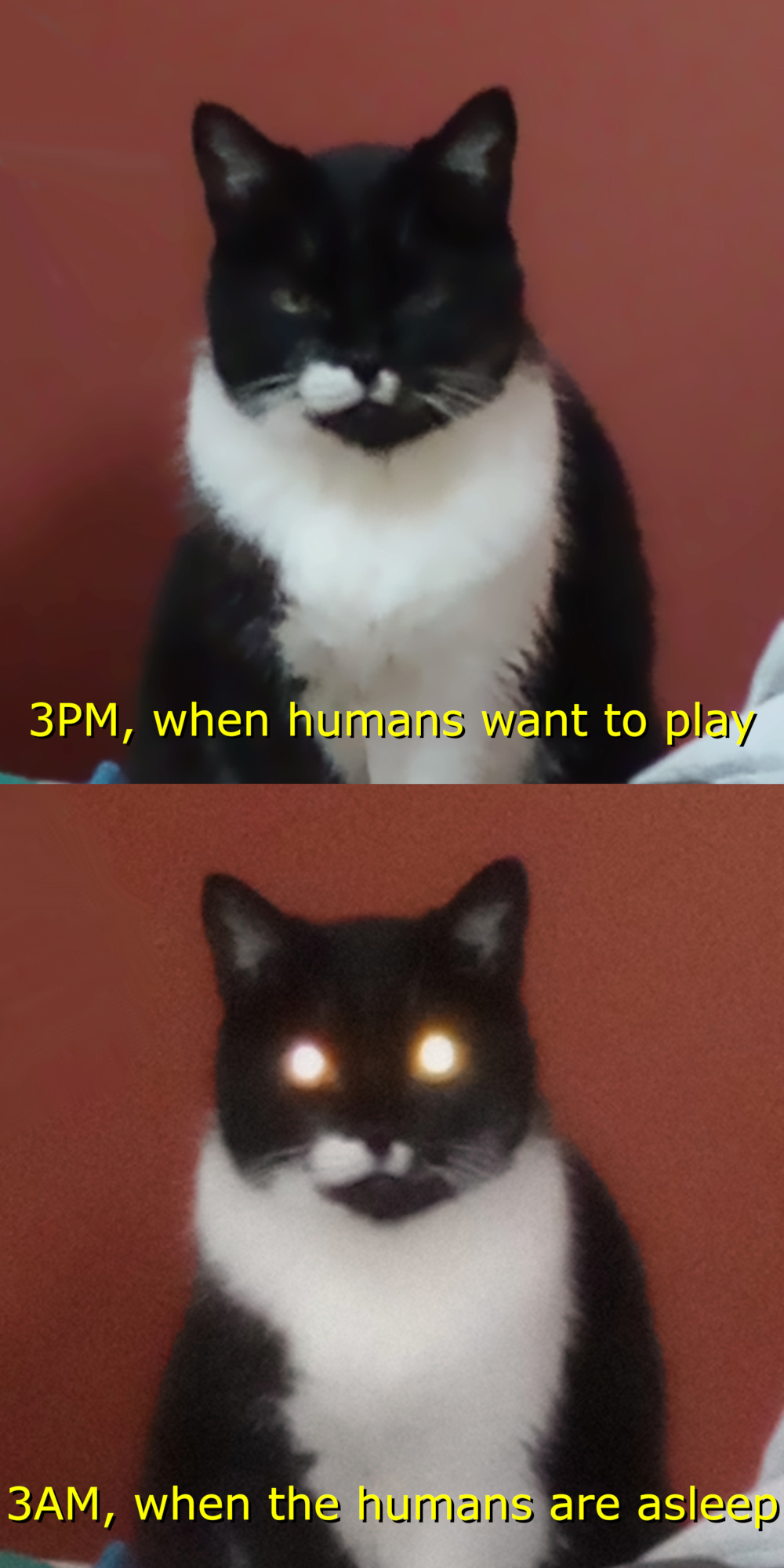
Oh well, life is suffering. But at least the suffering is bearable if it includes cats 😺
Sometimes I feel like Kika (my cat) might be doing this when I’m sleeping, because of all CLASH KLANK MMMRRRROOOOWN MRRRROOOOWN KPFAF! It’s usually because she rummaged my paper bin for new toys.
Sadly no amount of forehead kisses will prevent it. The most it’ll do is to make her look at disgust, as if saying “EEEEEWWW HUMANS HAVE COOTIES”.
You can also change it in the settings. Look for “search assist”; values are “never”, “on demand”, “sometimes”, and “often”.
But yeah, to be frank I use mostly DDG nowadays, I focused on Google due to the OP.
There’s an extension called Disable AI that gets rid of those intrusive Google Search AI “replies”. I strongly recommend people to use it, because… seriously, they are convincing but misleading trash.
The two phonemic transcriptions of “disregard” in the first picture are a prime example of that. I could go on a full rant about it, but to keep it short: compare them with the ones provided by Wiktionary, and play “spot the differences”. (Bonus points if you also play “spot the undeclared assumptions”.)
Haec amissio? (is this loss?)
Giving free access to a tool you can’t rely on, over a system you must rely on. What could go wrong? /s
Plus come on, even my personal files get a monthly backup, and I’m damn sloppy*.
Ah, and like others said: Claude didn’t “confess” anything. A confession is an acknowledgement of something you’ve done but you’d rather avoid others knowing, good luck claiming a bot has a mental model of people like we do.
*currently using a single off-site backup, a USB stick. This will change in a few days, as my new hard disk pops up; the old one will be used for, among other things, backup of important files. Then I’ll get a bona fide 3-2-1.
At its most absurd nadir, one is reminded of Juicero, a company that sold a $400 juicer that did the same work as squeezing its proprietary juice packs with one’s bare hands.
It does.
My comment doesn’t, but the OP does. Four downvotes in Beehaw is quite a lot, given the local users don’t downvote. Same thread is in the negatives in one of the cross-posts even if it’s on-topic.
And, like. I get why people would react negatively towards the product itself, but I don’t think it’s good tone to react like this towards the news being shared, you know?
People, please stop shooting the messenger. Please.
With that out of the way: I wish Mozilla didn’t waste so much money on chasing the latest trend of the season, and instead used it for its main products. Including Thunderbird. The one asking for donations.
Some years from now Thunderbolt will likely pop up in this list, of abandoned Mozilla products. Because it isn’t the result of Mozilla finding a niche to create an AI product to benefit users; it’s simply execs chasing the latest trend.
*Beehaw users are likely not seeing this, but this post has a bunch of downvotes.
That makes sense; it would be a mix of “if you can do it and I can’t, you must be cheating” and “your a bot than you’re arguement is invalid” ad hominem.
I think unnecessary combativeness might be also a factor. I’ve noticed on the internet people who want to fight against “something”, it doesn’t matter what; so they pick any low-hanging fruit they can find to fight you.
I’m actually using more those resources (em dashes, three points lists, “it’s worth noting that”, “it’s not X, it’s Y”, etc.) after AI popped up. They’re a damn good way to detect assumptive people, eager to conclude based on little to no info or reasoning; the same ones OP is complaining about. They don’t want a conversation at all, they want to whine, so if you give them a low-hanging fruit you can detect them early and block them as noise and dead weight.
That’s in my “casual” writing style, though. Professionally (as a translator) I mostly play by the tune, trying to preserve the style of the original. (Plus I barely translate things into English, it’s usually into Portuguese, very rarely Italian.)
That might not necessarily be the case – there is a possibility every example is completely organic – but it’s a sign of the times that we can’t just relax and assume the things we see and hear were made by people.
Guys, I found em dashes! The author is a bot! Bring me my pitchfork! /jk (those are en dashes, by the way.)
I think the text leaves the worst parts out: assumptions, decontextualisation, faulty reasoning, focusing on individual words instead of what they mean, and things like this. As in, issues with that part of comprehension that depends on logic, not on language proficiency.
All of those were already a problem before chatbots. But since chatbot output is really bad at those things, I think increased exposure to chatbots might make the problem worse.
That threat did not materialize, and now some apologists are saying that it was just one of Trump’s deranged bargaining tactics, as if that excuses such categorical declarations of mass violence from a US president
Even if playing along this fucking farce of “just” a “bargaining tactic” (instead of accurately representing it as commitment to war crimes), and even if we brush off all moral standards (we should not), that’s still bloody stupid. He’s making sure the Iranian population gets as motivated as possible to resist, while the United-Statian population resists against any sort of war effort. He’s shooting his own foot split hoof.
Currently, OpenAI, Microsoft, Google, Amazon, xAI, Oracle and even Meta have large contracts with the US military.
That should surprise nobody. Let’s play “spot who you know”:
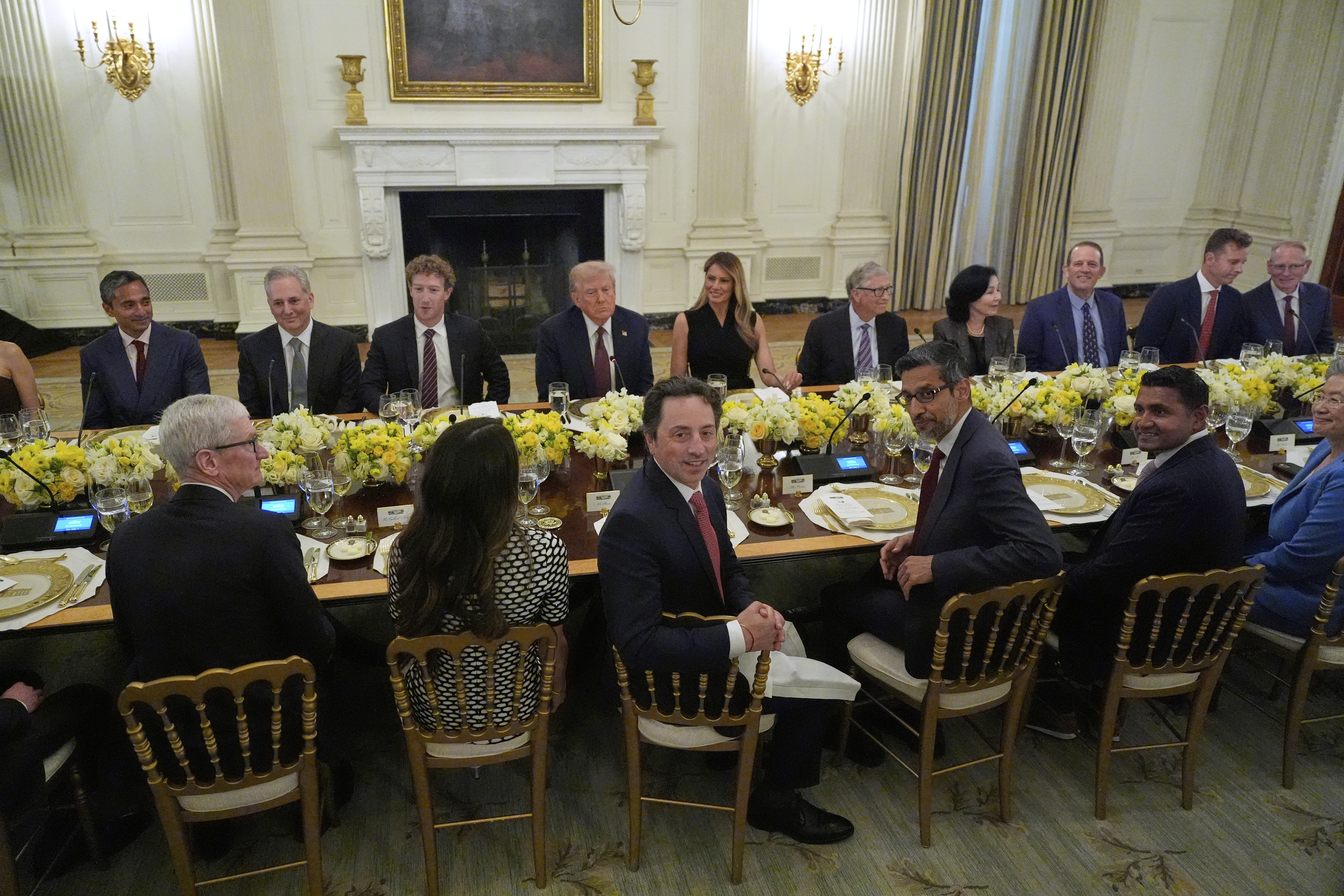
But this week should serve as a clarifying moment.
Aah, cut off the crap. If this is a clarifying moment for anyone, the person in question has been living under a rock since forever.

The tactic of mass destruction of homes in Gaza, where Israel has been accused of committing genocide, was described as domicide by academics, a strategy that is used to systematically destroy and damage civilian housing to render entire areas uninhabitable.
The accusation of genocide is completely accurate; domicide is only part of it. Israel’s modus operandi goes as follows:
It’s likely what Netanyahu is doing with Lebanon, too. Nazism called it Lebensraum (“life space”, or “living space”); I don’t know how the Zionism calls it, but it’s the same deal.
Moving past the obvious slurs in your comment
I already explained why they were used, here and here.
those migrants might actually get more of a red carpet treatment - sorry to spoil your vengeful dreams.
Emphasis mine. Contrariwise to your assumption, no, I don’t dream about people getting treated like subhumans. I encourage you to actually read the comment you’re replying to, and you’ll see
…seriously, I hope not. I’m not from the belief two wrongs make a right. Immigration is part of human social behaviour since some of us left Africa; and I’m not surprised they’re leaving USA, given the current awful state of that place acc. to news.
Side note: if I wanted to write “vengeful dreams”, I’d have better targets. And I wouldn’t write something as mild (yes) as that comment.
In part because they are who they are
i.e. a society built from oppression, living from oppression, and selling it as merit.
but also because of the spoken language making it easier to get higher paid jobs […]
Okay, you clearly did not get the comment you’re answering to, so I’ll summarise:
Your typical American expects to be treated above others, as if this was a divine right granted to the United Karenland of America. And news are simply parroting this mindset, doing everything possible to not step on little Karenlanders’ toes. I’m trying to remind them that, if they get well treated, it’s because there are plenty people out there who behave like decent beings, instead of behaving like your typical American.
Now, if your depiction of Romania is accurate or not in this regard, that’s irrelevant for the sake of my original comment. But I’ll ask you the following: do the Roma folks agree with you? Technically they aren’t immigrants, but a similar situation applies. (Just like African Americans in USA.)
Side note #2: language prestige piggybacks on the power (soft and hard) associated with its speakers. And I think it’s an open secret USA is going downhill. I wouldn’t be surprised if “I’m a native English speaker!” became a liability later on.
And as a personal opinion, I think it’s wrong to put all the American migrants in the same pot.
That is not what I’m doing.
Just as a word of advice, don’t use slurs from another cultures.
I promise you sound just as ignorant and bigoted using the slurs you don’t understand.
Frankly? If there’s something sounding bigoted here, it’s your “since you’re not American I assume you’re an ignorant*, so let me enlighten you poor little thing” discourse.
I might not be a native English speaker but I’m fully aware of the offensiveness of the word in question; and it’s being used for this very reason, to highlight shit immigrants in USA go through, but emigrants from USA expect to avoid. (Ooopsie, I’m supposed to mince words and call them “expats”, right?)
And by the bloody reactions, this shite worked pretty well, innit.
*just in case: nominalisation intended.
The “I’m not racist but” introduction [SIC] did not help here.
That is not even remotely close to what I wrote in the content warning; don’t distort it.
You’re way too comfortable using the slurs you used
Don’t assume. I don’t typically use one of the words in question, except metalinguistically and when relevant to do so. I did it here because I know it makes people from a certain privileged group (Americans) uncomfortable. Note also how I am not using it to target the group it’s usually used against (Black people; they aren’t part of the problem).
And regarding “spic”, since it targets to my own group (Latin Americans), I give myself the freedom to use it.
and this whole exercise waw just unnecessary mocking of people who genuinely just want better lives
I’m not mocking anyone for wanting a better life. I’m showing what other people, who are (or were, given the current state of the things) also seeking a better life, were subjected to. “Hope you don’t need to taste your own society’s poison, and be genuinely grateful if you don’t”.
If anything I’m angry at the bloody double standard shown by the media (including this text) regarding American immigrants and immigrants in USA. And, as I said, the expectations of some Americans. “I’m American, I deserve to be treated better than those fucking spics!” (inb4 refer to what I said regarding “spic”)
You’re openly enjoying a power fantasy of denigrating people
Stop assuming. You’re making shit up about what’s inside someone else’s head, dammit. If you want to criticise what I wrote it’s fair game, but I’m not wasting my time with the next bullshit about my “comfort” or “enjoyment” or whatever.
I already stated why I did this.
trying to escape from fascism
When some people here tried to escape from fascism, guess how they were treated there?
And by “fascism” here, I don’t mean just 16 months. I mean decades, due to coups staged by USA. And people going to USA because being treated the way I represented there would be still better than “giving birth to electricity” as a political dissident.
But we don’t talk about this here, right? Noooo, only Americans (or should I say WASPs?) trying a better life.
smugly asserting yourself as superior
Okay. Third assumption = bullshit in a row. I’m not engaging further with you, go assume what the Pope is thinking.




Days without Meta violating basic principles of honesty, dignity, and decency: zero.
Days without Meta reverting harmful decisions only because people outraged at it: zero.
(And no, neither counter is broken. They don’t reach one… because.)