
High injury and fatality rates. An astronaut risks their life everytime they ride an occaisional rocket, but a lumberjack has to deal with falling trees on a daily basis.
- 0 Posts
- 10 Comments
Joined 2 days ago
Cake day: March 15th, 2025
You are not logged in. If you use a Fediverse account that is able to follow users, you can follow this user.
Money is imaginary. It was invented for the purpose of saving time through pure convenience. Why not go a step further, and sacrifice some profit for the sake of giving everybody some security and agency? What efficiency we lose, we get back in people being able to enjoy the fruits of civilization. Money only has value if people agree that it does, and we should apply that understanding towards redefining the purpose of money: luxuries.
The elite have hoarded the value of what workers have provided to society, and then consistently throws those same workers under the bus. Your “material conditions”, is just unfettered abuse.
Also, the system I laid out? It gives political agency to ordinary people, because they can protest and strike without losing their home or starving. This takes away the greatest tool of coercion that capitalism wields against workers. That is way more valuable than raw profit, because people can oppose bad actors in society. Like Schuemer, or Trump himself. Same goes for shitty workplaces - people can genuinely wait for a better job. This will force many bad companies out of business, because people want to be treated humanly.
No, cavemen were very egalitarian. This is because back then, you couldn’t hoard much of anything - food spoils quickly, sex requires your partner to like you, and personal possessions were things like tools or the odd bit of clothing. It was when wealth could be preserved, such as livestock, stored grain, jewelry, and eventually coinage, that wealth became an hereditary thing.
This is why a future economic system has to be designed to prevent the excessive hoarding of wealth. Not too little, nor too much. Humans weren’t evolved to be free of consequence, especially from each other.
I have been trying to put together a document that attempt this concept of ensuring the survival of people, while making money into something used for lifestyle upgrades. Also, heavy emphasis on wealth limits and preferring people over corporations. IMO, corporations are great for personal interests, but are beyond terrible when it comes to the wellbeing of people. Thus, we should make having a job optional, but rewarding.
UNIVERSAL RANKED INCOME
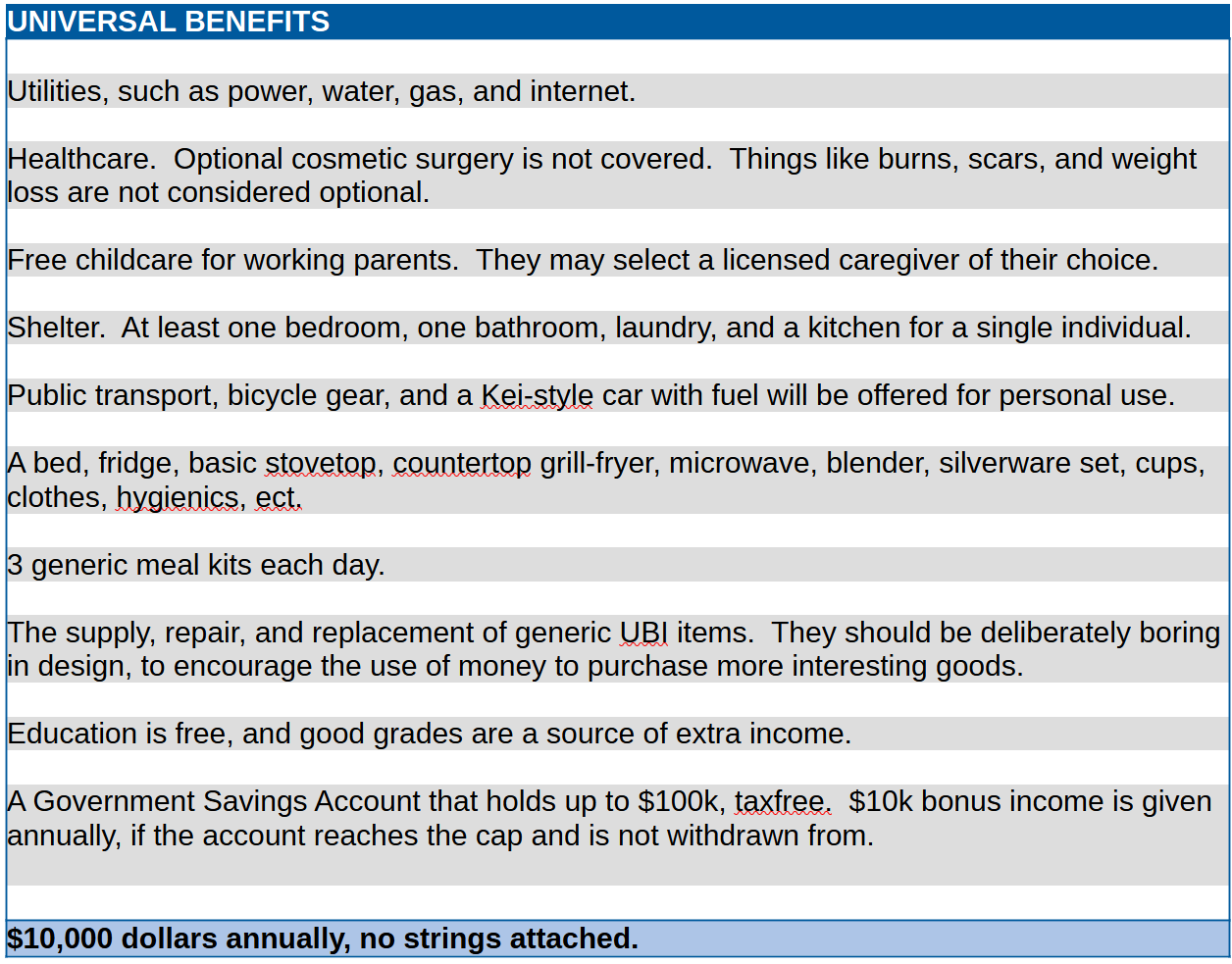
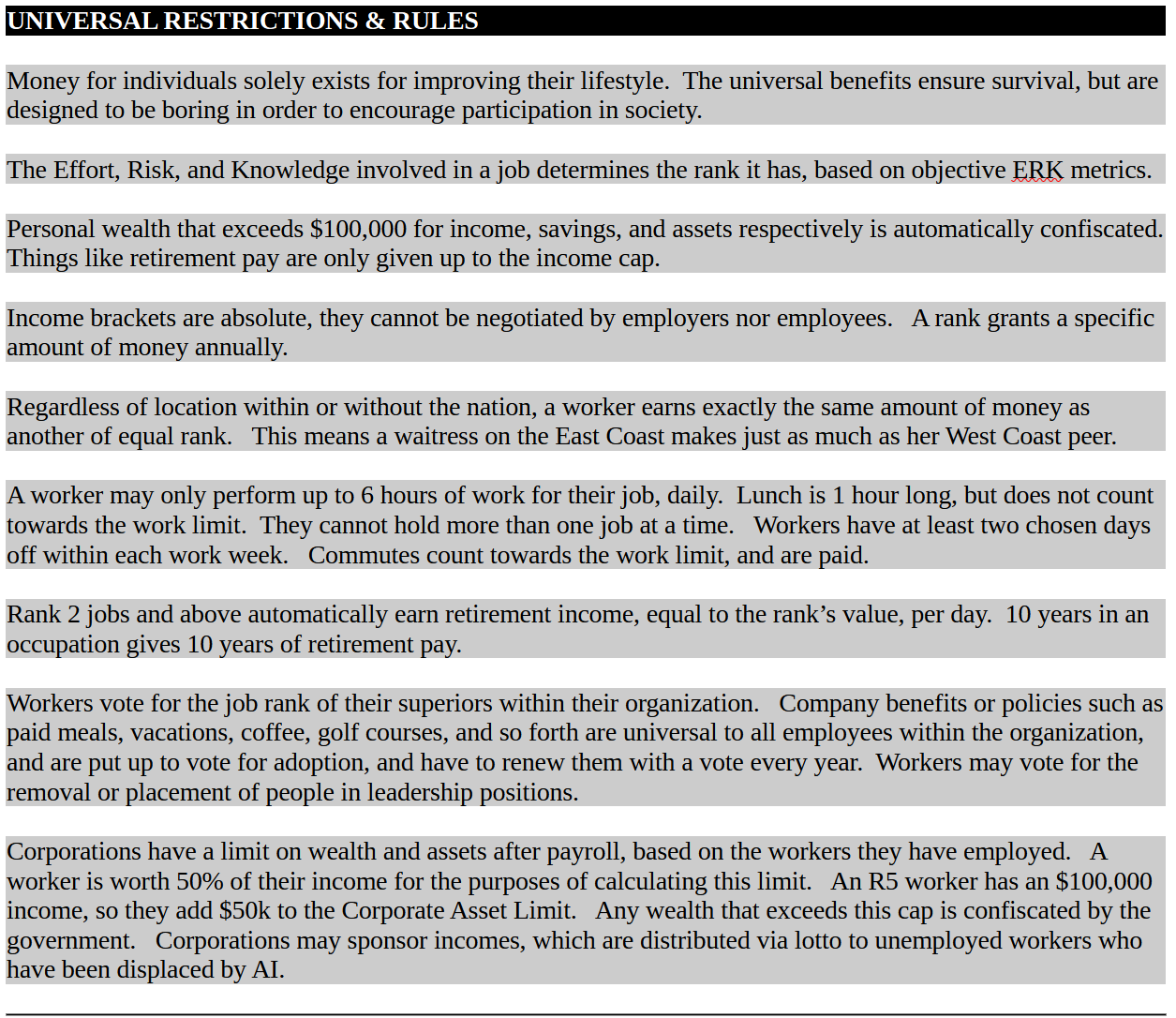
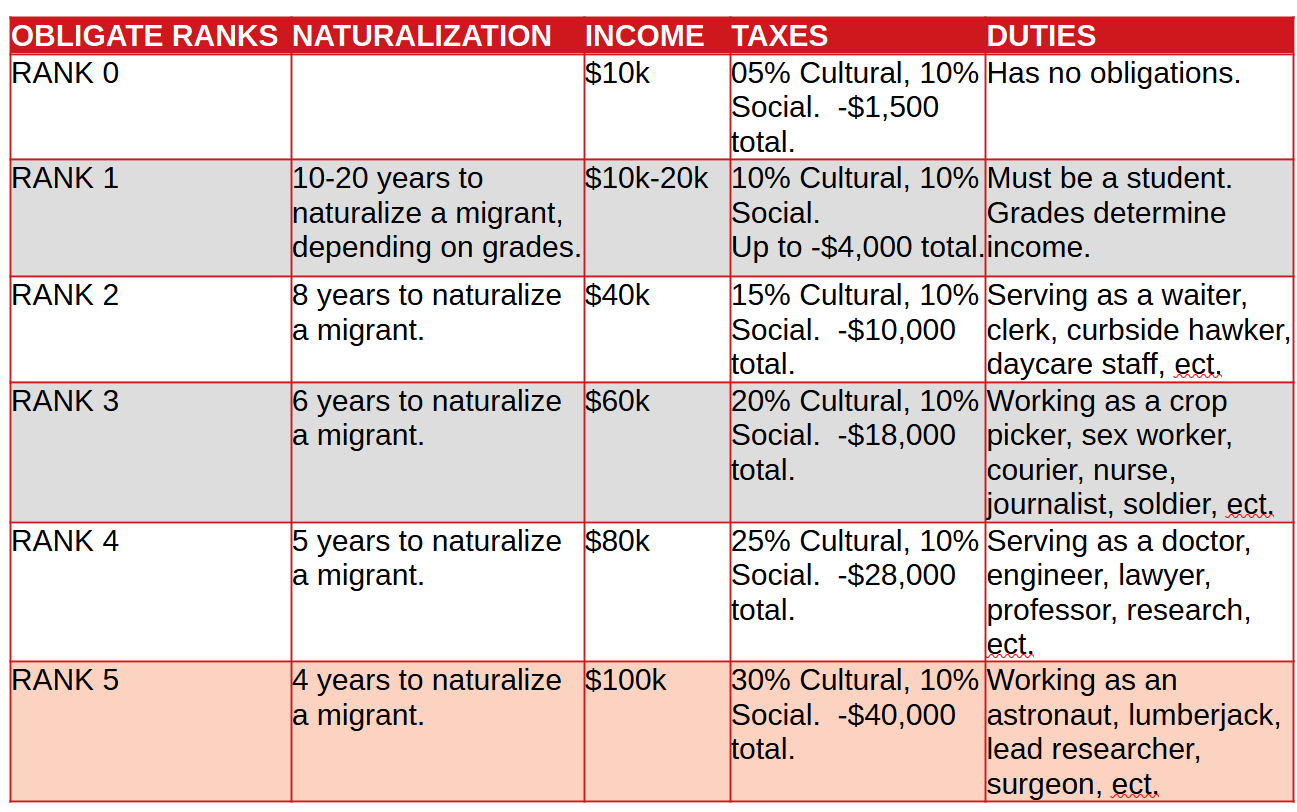
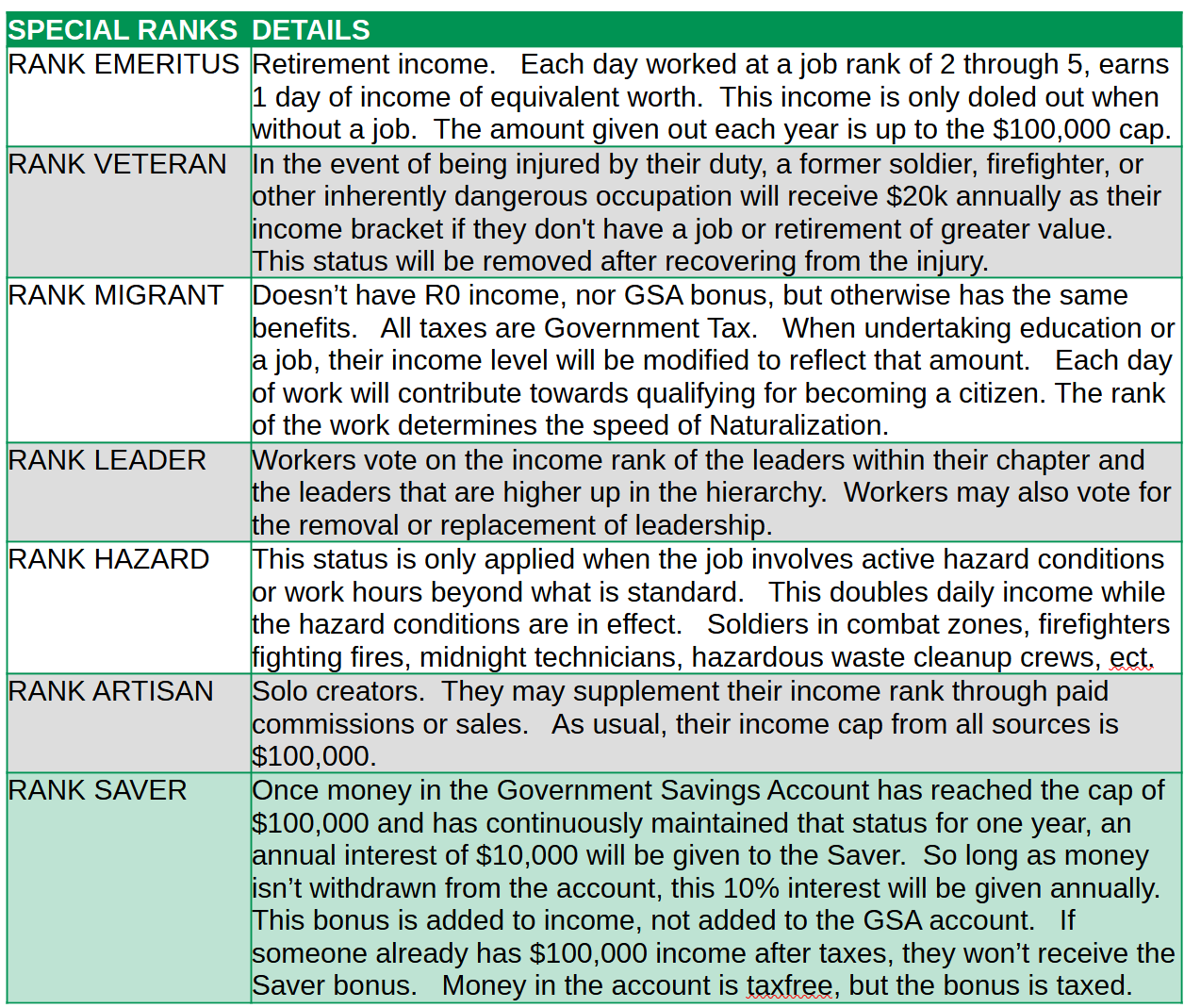
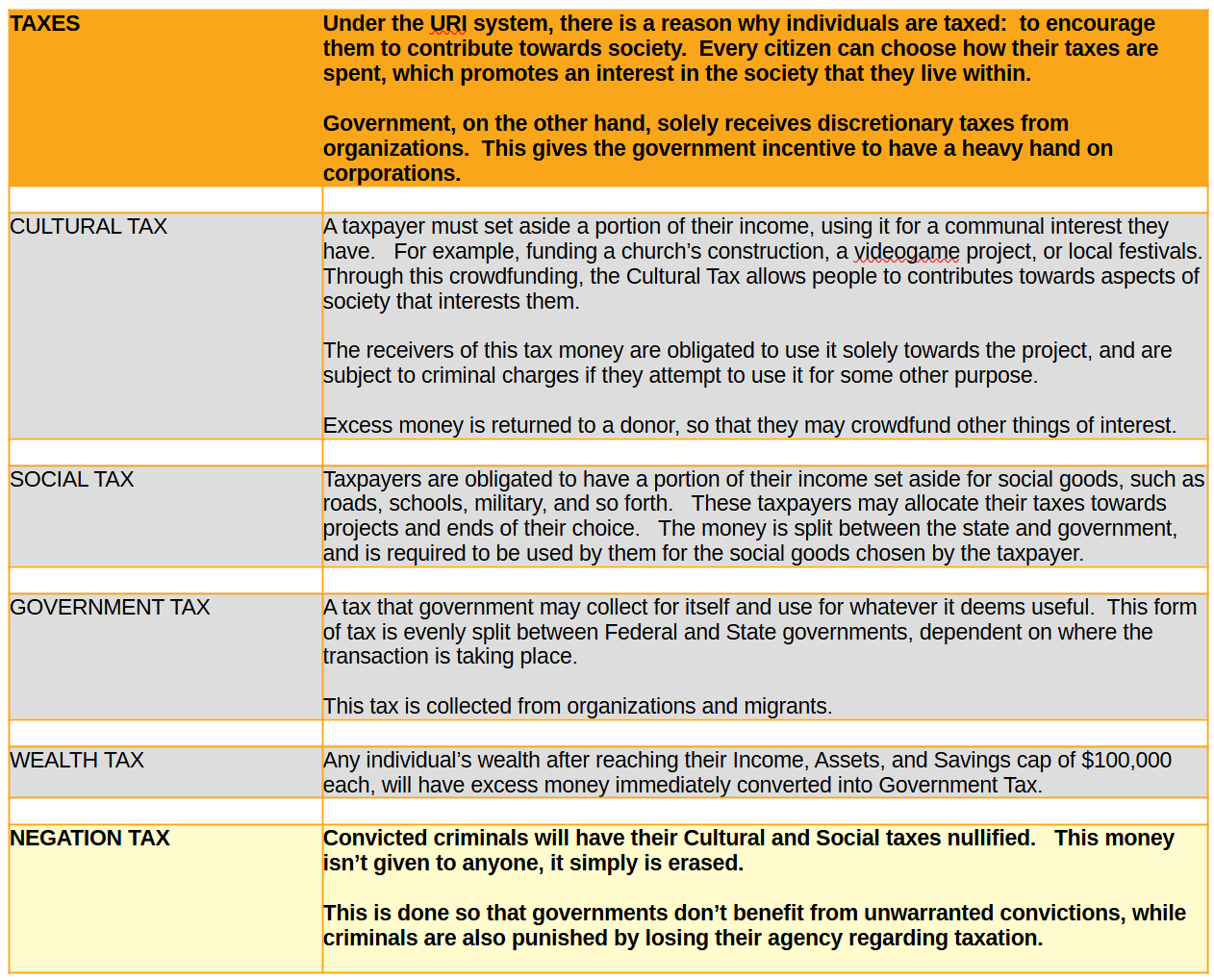
I think the problem with Communism and Capitalism, is that both were implemented in the first place without specific goals or structure. Those things got added on later, such as the 5 year plans or how lobbying works.
IMO, we will need a v2.0 Constitution in the future, designed not only to address political issues, but also create fiscal rules. Things like universal benefits and healthcare, how much people should be payed, wealth limits, workers voting for their leadership, and so on. This, like the Magna Carta or the French Revolution, will require force in order to displace the ways of old.
It will suck, but conflict seems inevitable. Might as well make the most of it, and forge a new way forward.

 1·13 hours ago
Personally, I think they should be allowed to threaten - and for those minorities and good folk to openly promise bloody murder if the racists tried their luck.
The right-wing traditionally has a monopoly on violence, not just physical, but also in speech. When you are free of consequence, your reach will grasp ever further. Like what Trump is doing with his EOs.
Honestly, the two are complete opposites when it comes to style of speech: Hitler imparts certainty in the listener, and Trump causes utter confusion. The only similarity is that both are completely evil.
Drawn and quartered, with Tesla vehicles.
I would like to vote for a Progressive party. Sanders and friends for every ballot.
IMO, the thing of most value for my position is that it normalizes opposition and resistance. After MLK died, the media was used to enshrine his approach in the history books…and Malcom X was a footnote at best for most students. It is through offering the promise of violent revolution if peaceful evolution wasn’t negotiated, is how we got here without too many corpses.
By removing the notion of violence from protest, things were lost:
1: Fewer people to protest anything. The elimination of ‘rough’ characters simply meant fewer people to raise signs, fists, or to speak.
2: It has become taboo to associate with people who believe in giving as good as they get, or being aggressive. This means that kind protestors simply don’t communicate with the violent ones, so there is less coordination for their goals.
3: A wider array of actions to do for protest. For example, ignoring ‘safe space’ rules, such as the perimeter around JD Vance’s house, or burning Teslas in America, or displaying the (wax) severed heads of Trump and friends. These aren’t kind things, but they certainly give a message to the people in charge.
If roughness in politics among everyday people was ordinary, we might have more work strikes - or the people in the US Treasury could have denied DOGE unlawful entry, because the spirit of opposition was ingrained into people in that other timeline.