

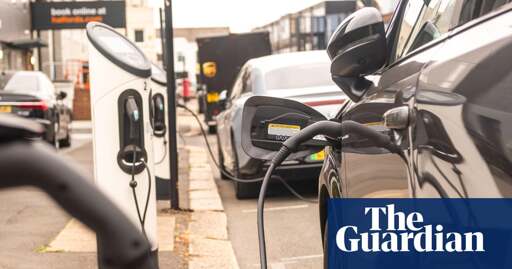
While most hybrids are said to use one to two litres of fuel per 100km, a study claims they need six litres on average
Plug-in hybrid electric cars (PHEVs) use much more fuel on the road than officially stated by their manufacturers, a large-scale analysis of about a million vehicles of this type has shown.
The Fraunhofer Institute carried out what is thought to be the most comprehensive study of its kind to date, using the data transmitted wirelessly by PHEVs from a variety of manufacturers while they were on the road.
. . .
According to the study, the vehicles require on average six litres per 100km, or about 300%, more fuel to run than previously cited.
The scientists of the Fraunhofer Institute found that the main reason for the higher-than-stated fuel usage was due precisely to the fact that the PHEVs use two different modes, the electric engine and the combustion engine, switching between both. Until now it has been claimed by manufacturers that the vehicles used only a little or almost no fuel when in the electric mode. The studies showed that this was not in fact the case.
I agree with everything you’re saying, but this part. As you stated before, those are intended to allow for an apples to apples comparison and make it easier for the consumer to judge a car’s funel economy, without having to do their own math (which - lets face it - most people suck at).
If the underlying usage pattern doesn’t reflect a typical average use, that’s an issue, that can be adressed. And when studies show that they don’t why not take that as a call to improve upon the methodolooy?
There’s always going to be the caveat that one’s one usage pattern might deviate greatly from the standard, and absolutely it’s a must, that the individual values are indicated, so people CAN do their own math. But having a standard combined measure is still a useful tool.
Addendum. I have to admit to really only having read the article just now.
This is the real underlying issue here. It’s the EUs regulation on CO2 emissions reduction, that car manufacturers are abusing here. They are designing their car in such a way, that they look good on paper and can pass the requirements of the regulation, while their real-world emissions are much higher. (And in that regard, it’s not too unlike Dieselgate. Minus the intentional technical manipulation ofc.)
While your claim, that it’s the individuals responsibilty how they use their car is obviously true for an individual car’s fuel consumption, that realization is also utterly useless as a basis for effective policy. There needs to be a standard, and that standard better reflect an empirical assessement of reality.