
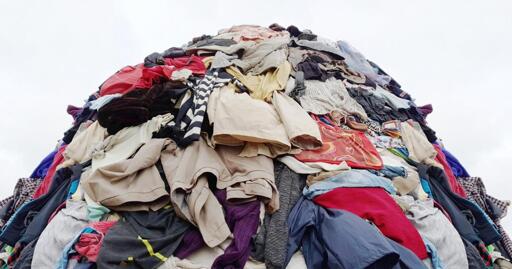
Instead of discarding stock, companies are encouraged to manage their stock more effectively, handle returns, and explore alternatives such as resale, remanufacturing, donations, or reuse.
The ban on destruction of unsold apparel, clothing accessories and footwear and the derogations will apply to large companies from 19 July 2026. Medium-sized companies are expected to follow in 2030. The rules on disclosure under the ESPR already apply to large companies and will also apply to medium-sized companies in 2030.
It’s so very kind of you to imagine good will behind their motives. I am very sorry to inform you that is incorrect, they very much don’t want their clothes available in charities or even discounted, because it cheapens their brand overall. It’s malicious, as all capitalism, inherently, is. They don’t want “poor” people wearing their brands. They would rather take a loss, than sell the item at discount, they very much have infrastructure available to afford other avenues, they choose not to, because scarcity invokes a higher price on their product. Plus the status of high prices, keeps a ratio of higher price per product, which means a higher profit margin per product, the item probably costs them 5c to make, they sell it for hundreds, what they most want is to protect that margin, if their last season stock were available at half price, anywhere, people en masse would just buy last seasons stock. Destroying it, even though they make a massive loss by doing that, protects their future profits.
Here’s an idea. Instead of having artificial scarcity, they could have actual scarcity. Don’t manufacture 10 000 super fancy shirts. Make only 500. They will run out sooner than anyone wants, you’ll still make absurd profits and customers are left wanting more. When the next season rolls around, you make 500 of the same shirt, but in a different color. Charge 2x more than last time, but you’ll be able to sell them anyway now that people know how fast they disappeared last time.
Side note: Making stuff to feed the vanity of millionaires is revolting, but at least this way it doesn’t have to be so wasteful.
Isn’t that exactly what artificial scarcity is? Limited stock for the sake of limiting it, not due to actual supply/demand.
Yeah, I guess we need a third category then. What they’re currently doing involves overproduction at first, but that is later turned into artificial scarcity by destroying the products. How’s “extra wasteful, diabolical scarcity” for a term?
But see, if I order 10,000 I get the bulk price of $5 each. If I only order 500 then they will cost the seller $40 each. Of course this effect can be minimized with annual volume commitments where a miss means that you simply pay your supplier the difference.
The reality is that the normal situation will not be a difference as stark as this example, but some form of it exists.
And the decision is always guided by greed and complete disregard for sustainability.