

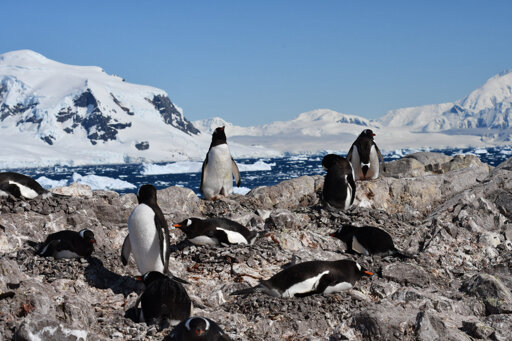
A decade-long study led by Penguin Watch, at the University of Oxford and Oxford Brookes University, has uncovered a record shift in the breeding season of Antarctic penguins, likely in response to climate change.
These changes threaten to disrupt penguins’ access to food and increase interspecies competition. The results have been published (20 January—World Penguin Awareness Day) in the Journal of Animal Ecology.
The researchers examined changes in the timing of penguin breeding between 2012 and 2022, specifically their “settlement” at the colony, the first date at which penguins continuously occupied a nesting zone.
The results demonstrate that the timing of the breeding season for all three species advanced at record rates. Gentoo penguins showed the greatest change, with an average advance of 13 days per decade (up to 24 days in some colonies).
This represents the fastest change in phenology recorded in any bird—and possibly any vertebrate—to date. Adélie and Chinstrap penguins also advanced their breeding by an average of 10 days.