

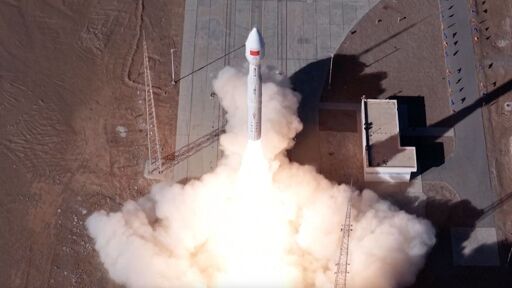
“As far as we know, no coordination or deconfliction with existing satellites operating in space was performed, resulting in a 200 meter close approach between one of the deployed satellites and STARLINK-6079 (56120) at 560 km altitude.”
“As far as we know, no coordination or deconfliction with existing satellites operating in space was performed, resulting in a 200 meter close approach between one of the deployed satellites and STARLINK-6079 (56120) at 560 km altitude.”
The low orbits that need to be constantly maintained or they naturally deorbit are the exact opposite of Kessler Syndrome. If every Starlink satellite was to disintegrate right now, the majority of the debris would be gone in 5 years.
After 5 years of aluminum dust coating every surface on the planet… I can’t imagine that would be good for us to breathe, and drink.
That’s a great point, and has almost nothing to do with Kessler Syndrome. But what can I say? I live near a city where the leaders of a few nations decided it would be fun to test the effects of fallout by releasing radioactive dust over it. Aluminum oxide is pretty benign, comparatively.
Certainly, the consequences of our actions need to be considered, but let’s stick to the legitimate ones, such as what you listed, and not the highly improbable ones such as Kessler Syndrome.
… Unless they functionally constitute a massive, fast moving, kind of net, that anything trying to climb to a higher orbit has to pass through, and hope to not collide with, as showcased by this article we are commenting on.
Anything that’s trying to break through VLEO, well, if a collision happens on its way to LEO, or beyond, some of those debris will be headed to LEO or beyond.
That’s not really how orbits work. Unless there is a stabilizing burn or very unusual conditions the debris will have an eccentric orbit, going both lower and higher than the impact point. And passing below the orbits of the starlink satellites will expose them to even more atmosphere than they will be at the starlink orbit, so their orbits will decay faster than their apogee would suggest. Sure, some will experience the right conditions to put them in an orbit such that the perigee is at the altitude of the starlink orbits or even higher, but the vast majority will not.
This does not preclude carelessness or malice causing impacts, the launch in question being the former and China’s satellite destruction previously being the latter. Do you think Starlink isn’t releasing their orbital paths to other launch organizations? And that net is generally very predictable. Any deviation from the existing orbit is done at the expense of the lifespan of the satellite and while there are a lot of those satellites, there’s far more empty space between them. The kind of planning that rocket launches normally get is more than enough to hit those windows, along with the other windows rocket launches normally have to hit.
Ok, so you admit the scenario I describe is possible, just not ‘likely’ in your view… after initially dismissing it.
Did you read the article?
What happened was not that the whole main rocket zoomed right past a Starlink Sat, while still doing the initial burn sequence.
What happened was:
… One of the sats released by Kinetica 1 whizzed by SL6709 at a 200m distance. 48 hours after the Kinetica 1 launch.
So… that would have occurred during when said K1 deployed sat… was doing some kind of orbital stabilization manuever, most likely, no?
Either that, or, even worse… it wasn’t, it doesn’t have much of its own ability to trim and adjust its own orbit… which would mean it is just stuck, on an eccentric orbit, possibly stable, possibly not… that crosses above and below the altitude Starlink sats are at… and there’s like ten thousand of them…
… which CAS Space does not seem to either have accounted for, or have the ability to account for.
So yeah the situation that is currently occuring, that is from the article we are talking about, yeah, that does not to me seem like an unlikely thing, given that it is, or something pretty close to it, seems to be currently happening.
Given that CAS Space said:
That would seem to me to imply that they had previously been in contact with SpaceX, to be able to coordinate launches and do trajectory deconfliction… but that this coordination ceased… for some reason.
https://payloadspace.com/china-calls-nasa-on-orbital-conjunction/
Looks like China’s been asking for help from NASA with this sorta stuff in the last few months… I guess SpaceX didn’t get the memo?
Nobody’s sure what the … correct procedure or chain of command is here?
… Does Starlink actually publish and make all its Sat locations snd trajectories, in highly accurate detail, available to Chinese space companies/agencies?
Thats a legitimate question, I don’t know.
You’d have to have basically a real time syncronizhed data sharing operation going on, given how many Starlink sats there are, how often they make orbital adjustments or fail.