
4·
7 hours agoLink goes to some comment section.
Link goes to some comment section.

a cold war brought on by drones instead of nukes
Oh great now I am worried about drones carrying dirty bombs.
Funny how the “blue no matter who” and “vote for the options you have not the ones you wish you had” arguments just seem to have poofed out of existence.
I mean, that’s presumably why heads of state don’t go about assassinating other heads of state in the first place. Once you open that can of worms, what do you expect.
Even Chess rules tell you to not do that… And it is quite telling that that rule was indeed added by the Persians… Heed the fucking ancient wisdom you philistine fucks.
The NCAG was established by the Board of Peace, which was in turn set up by US President Donald Trump when he brokered the ceasefire between Hamas and Israel last October. But it has remained based outside Gaza for months, reportedly due to Israeli objections to its entry into the war-devastated territory.
Hamas and other Palestinian factions have held several rounds of talks in Cairo with mediators to narrow differences, particularly over the second phase of the Gaza ceasefire.
The first phase involved the release of the last Israeli hostages held by Hamas in exchange for Palestinians detained by Israel.
The transition to the second phase, which was to involve Hamas’s disarmament and a gradual withdrawal of Israeli forces from Gaza, has been stalled for months.
Israeli forces have actually expanded their presence in the territory in recent months, taking control of nearly 70 percent.
I love the smell of Oslo in the morning…
The Iran war is winding down
Well…
I would assume these kinds of meetings are scheduled weeks or months in advance.
I guess I’m helping by articulating my understanding?
Otherwise, yes we seem to not be disagreeing.
Nobody has ever reached a point where that was actually a practical decision to make. So nobody has ever said oh yea this is enough we should stop :)
Edouard Bernstein, the first theoretical of social democracy famously said that the “the final goal of socialism is nothing, the movement is everything”. I think it’s a matter of perspective, of what you choose to care about. My most sympathetic read of this position is that actually abandoning capitalist relations is not something that you can “choose” to realistically do because capitalism is too tied up with the survival needs of people.
Well, when it comes to practice there are a few things:
People should not be scared to call themselves socialists and still lay claim to liberal democratic bona fides. That combination is not a ruse and a fraud as the Right would like to insist but a real current in socialist thought since the beginning. The newly elected leader of the NDP here in Canada actually came out and called it recently.
I would actually also argue that honest social democrats, can in practice be more radical than self proclaimed socialists, if in practical politics they propose and achieve deeper reforms. I’ll trade an effective Mamdani for a high falutin big mouth talking European self proclaimed socialist that does fuck all (looking at Tsipras) any day of the week. It’s easy to talk a big game and do nothing and we shouldn’t underestimate the transformative power of promising modest reform and delivering.
It’s also important to keep reminding so called moderates eg in the Democratic Party that DSs and SDs can very much coexist in a left of centre party and that cosplaying the red scare all the time is extremely self defeating. Common ground exists.
Finally, I would say it is also important to not cede the socialist vision to the MLs as if they are the sole and rightful owners of it. They are not, never have been, and liberal democracy is not as alien a concept to socialist thought as they pretend it to be. Political liberalism is not only reconcilable with socialism but there are very legitimate currents of Marxist thought that assert it. Nicos Poulantzas famously argued that “socialism will be democratic or it will not be at all”, asserting that institutions of representative democracy are essential for a socialist transition to avoid authoritarian state-socialism.
John Kerry of all people warned the world in 2016:
here is a fundamental reality: if the choice is one state, Israel can either be Jewish or democratic – it cannot be both – and it won’t ever really be at peace
The Israelis have made their choice for a One State solution and have physically implemented it. So now they are faced with Kerry’s stark dilemma: Jewish or democratic. They are taking the former route, creating a genocidal apartheid state.
How anyone can still support such a path in the name of “shared values” is beyond me. There are no shared values with a genocidal apartheid regime unless you yourself are genocidal and pro-apartheid.
Yes it is very different from Leninism. But what you’re describing are still “how” elements not “what”. And to call a spade a spade, Democratic socialism and social democracy are both deeply rooted in the Marxist tradition. The former in the thought of Karl Kautsky, the latter in the thought of Eduard Bernstein.
Bernstein is exactly who Rosa Luxemburg is responding to in “Social Reform or Revolution?”. Kautsky positioned himself in the centre between Bernstein’s revisionist reformism and what he saw as Luxembourg’s adventurism. He was in fact a huge influence on Lenin himself, who considered Kautsky a real authority in Marxism but disagreed on his tactical analysis and ultimately he ended up rejecting it.
Long story short, democratic socialism is not external to the body of Marxist thought. It played a key role in its intellectual development. For Leninists it became the anvil on which they hammered their own understanding. But since the fall of the Soviet experiment and the dengist/nationalist turn of the Chinese one, taking a serious second look at democratic socialism is, I think, the intellectually robust thing to do.
Social democracy and democratic socialism are not the same.
Social democracy, yes, is what you describe: try to regulate capitalism and make it livable via labor protections, public services and a welfare state. The end horizon is something like the Scandinavian dream.
Democratic socialism is different: the end horizon is indeed full blown socialism, with social ownership of the means of production and ultimately with abolition of capitalist relations altogether. However, for democratic socialists, the path to that horizon does not pass via revolution but via the democratic process.
In practice social-democrats and democratic-socialists end up finding it easy to agree on a political program for the here and now and so very often they coexist. Both want to reform capitalism.They just don’t agree as to how deep that reform can go. For the democratic socialists, the things social-democrats want are in fact the means towards the end result. For the social-democrats that end result is not necessary considered possible or even desirable. But the two have never won that much that their differences would actually come to a head.
In industrial agriculture, glyphosate (Monsanto’s Roundup) is used on “Roundup-Ready” monocultures that are genetically modified to tolerate it. It’s a very specific and supposed to be heavily monitored and carefully controlled process.
That use on its own is controversial for a bunch of reasons, but the idea of using roundup as warfare outside a roundup ready monoculture is a whole other thing. This isn’t about spraying resistant GMOs of a monoculture, it’s about destroying all plants in an area. It’s actually a really fucked up and evil thing to do.
Even more: every drop makes gets us closer to the breaking of the dam.
deleted by creator
John Kerry of all people warned of this in 2016:
here is a fundamental reality: if the choice is one state, Israel can either be Jewish or democratic – it cannot be both – and it won’t ever really be at peace
Israelis have made the choice, election after election for the last 2-3 decades to elect governments that expanded the settlements, derailed the figleaf of Oslo and destroyed the practicality of a Palestinian state. The choice for One State has been made and implemented. So now they are faced with Kerry’s stark dilemma: Jewish or democratic.
People’s response to this reality falls I think into one of four positions:
Option 3 sounds “anticolonial” and “revolutionary” but it is delusional as it ignores the facts on the ground. It is also unjust. Just like any other settler-colonial state from Canada, to Brazil, to the US, to Australia, there is no reset button that can be pressed to undo history. We have to live with the legacy of settler colonialism. There are Israeli jewish babies being born today that are third, fourth or fifth generation “sabras”. You can play the pseudofanonist edgelord and imagine some kind of Pied-noir style “the suitcase or the coffin” expulsion, but even the Pieds-noirs were only about 1 million and 10% of Algeria’s population, as opposed to about 7 million and 50% of the population of the land of historic Palestine. Those people aren’t going anywhere. The 7 million Palestinians are also not going anywhere unless the Israelis are allowed to complete the genocide.
The only path forward that is not (further) genocide or slavery is the extremely difficult path to decolonization. Reparations, truth and reconciliation, democracy, human rights for both communities. From the river to the goddamn sea.
Note: this is not hate speech in Germany and other jurisdictions.
They haven’t been manipulated by the AfD though. They’ve been manipulated by mainstream media.
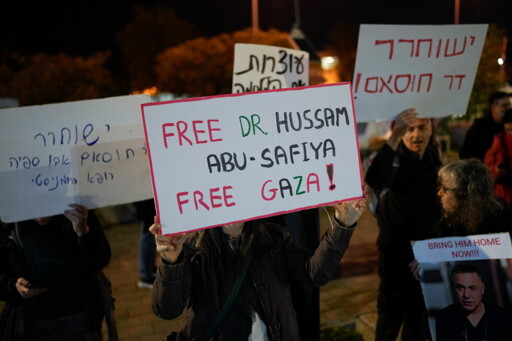
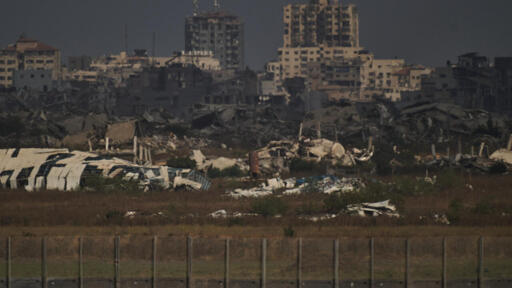
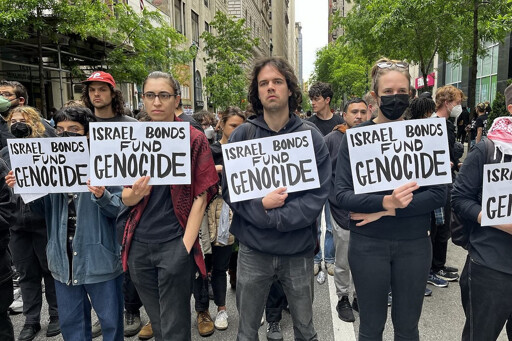








Now the post is just a photo?