Even if we ignore microplastics, steel wheels on rail are significantly more efficient than tires. Rail is just better unless you are going to places not traveled much.
An example of a very light high-speed passenger train is the N700 Series Shinkansen, which weighs 715 tonnes and carries 1323 passengers, resulting in a per-passenger weight of about half a tonne. This lighter weight per passenger, combined with the lower rolling resistance of steel wheels on steel rail means that an N700 Shinkansen is much more energy efficient than a typical automobile.


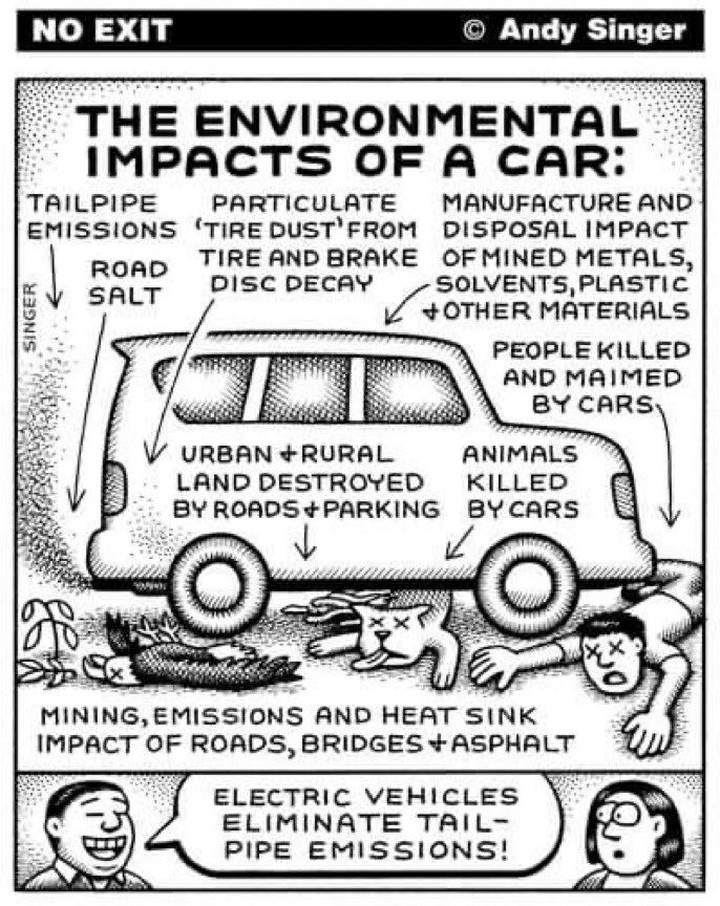
I’m curious why you think ocean microplastics can stick around for a few more decades or centuries
Even if we ignore microplastics, steel wheels on rail are significantly more efficient than tires. Rail is just better unless you are going to places not traveled much.
I was gonna argue that rolling resistance doesn’t have a large impact on efficiency, but apparently I was wrong
https://en.m.wikipedia.org/wiki/Rolling_resistance
It’s really counter intuitive to how we think of rolling resistance.
https://piped.video/watch?v=tfA0ftgWI7U
This video helped explain to me how the material the wheels are made of does impact the rolling resistance because the wheel deforms.