

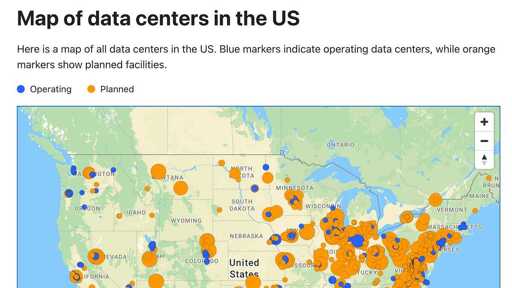
So, there’s a piece in Jacobin arguing that data center moratoria are a “terrible idea” making the rounds on social media and beyond. It’s pretty easy to see why this makes for some good discourse; naturally, there’s going to be frisson among AI optimists when a perceived opponent—here, the nation’s most influential socialist magazine—makes a case for aligning with the tech industry’s goals.
While I’m pretty unconvinced on all but one or two of the points that the piece itself raises, and I think it seriously misconstrues the class politics of data center fights, I do think it’s worth litigating this idea. Because I do believe we should be thinking about what a broader and more engaged politics of resisting, regulating, and ultimately governing AI might look like. It’s a good occasion, in other words, to ask:
- Who is fighting data centers?
- Why are they fighting them?
- Are anti-data center movements a dead end—or a starting point?
True that there’s no way to enforce watermarks, but it could be required to mandate that paid AI models include an invisible binary watermark in the last digit of the, say, red colour channel, so odd bits form something like a repeating QR code relative to the even bits; require the fans in keyframes in AI produced video, too.
It wouldn’t work for text, obv, and this would be trivially easy to strip in post-processing, but it’s technically and legally possible, with low cost. Of course it wouldn’t affect local models, but not many people are running good image/video genAI locally anyway.